
This past weekend at Stanford, I watched another cohort of doctoral students hood. One of them was mine, and standing at the front while the chair read her name, I found myself thinking about my own PhD graduation at MIT, about Ed Roberts standing next to me that day, about my father in the same photograph, about the long arithmetic that has now placed me on the other side of that ceremony.
It is the closest I have come, since Ed died on February 27, 2024, to fully understanding what he was for.
He was my doctoral advisor at MIT Sloan. He was the founder of what is now the Martin Trust Center for MIT Entrepreneurship. He was the David Sarnoff Professor of the Management of Technology for most of my time as his student. Entrepreneurship as an academic field of course traces back further, to Schumpeter, to Drucker, to a long lineage of scholars who insisted there was something here worth studying. But high-technology entrepreneurship as a distinct empirical field of study really started with Ed. His 1991 book Entrepreneurs in High-Technology: Lessons from MIT and Beyond did, more than any other single work, the load-bearing job of moving the study of tech founders from collected anecdote to a real empirical field.
It has taken me more than two years to write anything public about him. Not because there hasn’t been something to say. Because there has been too much. And because watching one’s own students cross the same stage is, it turns out, the only place from which I knew how to write it.
I want to do three things in this piece. I want to tell you what kind of advisor he was. I want to widen the lens and talk about the intellectual lineage I inherited through him, both the methodology, through Jay Forrester and the founding of System Dynamics at MIT, and the formal economics lineage, through Franklin M. Fisher and the Tree of Zvi Griliches. And I want to be honest about what it has felt like, on the receiving end of that inheritance, to think about what it now obligates.
What it was like to be his student
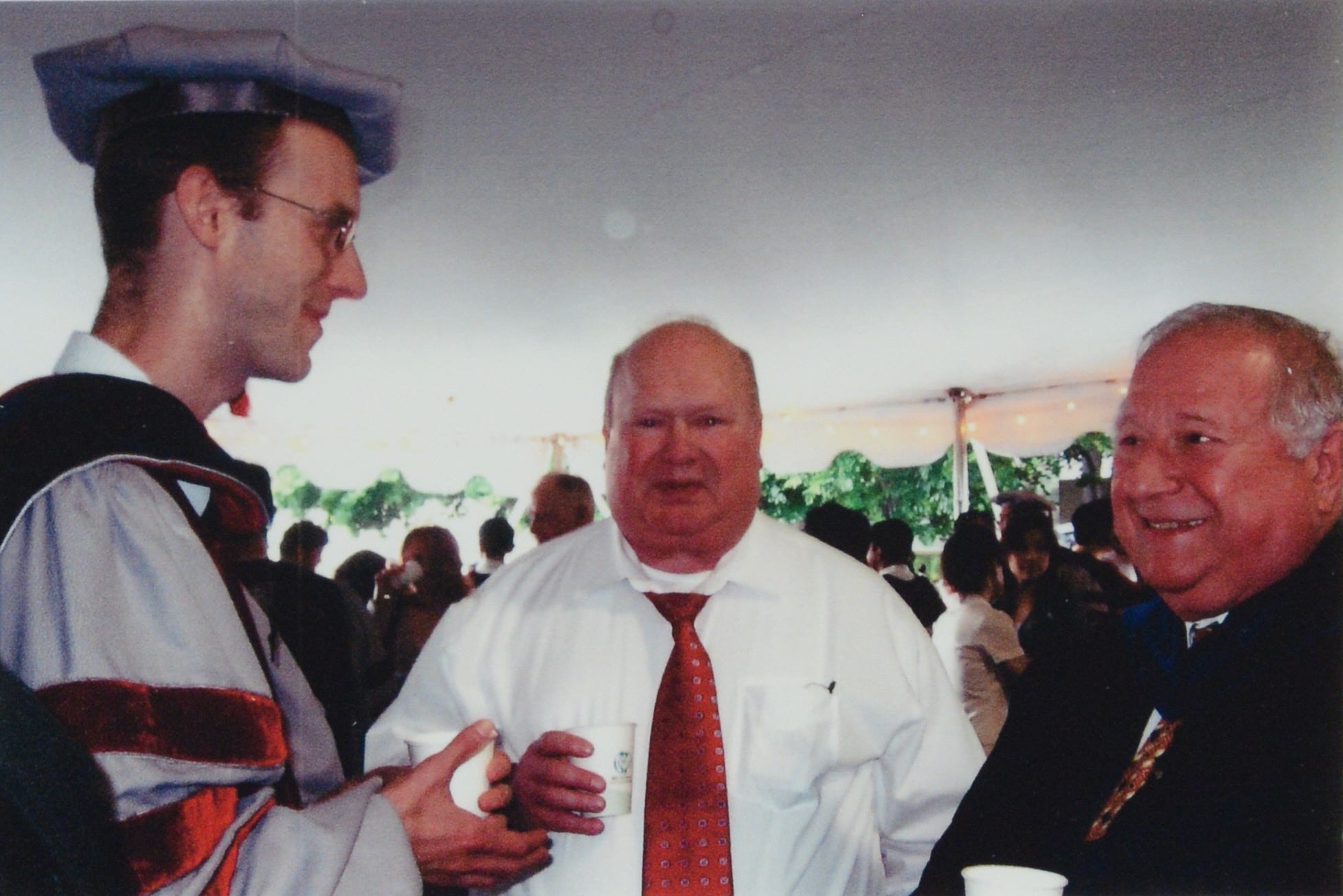
The first thing to know is that Ed didn’t run a charismatic lab. He didn’t deliver thundering pronouncements. He worked from his office, with the door open, in conversations that sometimes lasted ten minutes and often lasted ninety, and that almost always left you with the same feeling: that the next move on your project had become clearer, and that he expected you to make it.
He had a quiet (and sometimes a LOUD) way of redirecting you when you were wrong without making it humiliating. He had an even quieter way of telling you when you were right, usually a sentence or two, then back to the next problem. He was generous with credit, careful with criticism, and unhurried in a way that I have come to appreciate more, not less, as I have run my own students.
I joined MIT early, in the summer of 2005, before my coursework officially started, specifically to work on the 2003 wave of Ed’s MIT alumni survey. That survey, in the form Ed had been running it since the 1980s, was already a serious longitudinal instrument. It was about to become the basis of the 2009 Kauffman / MIT alumni-impact study (the one that estimated companies founded by MIT alumni would, if grouped as an independent nation, generate roughly $2 trillion in annual worldwide sales: the eleventh-largest economy in the world at the time). Working on that 2003 wave in the summer of 2005 is how I learned what an alumni-entrepreneur survey actually was.
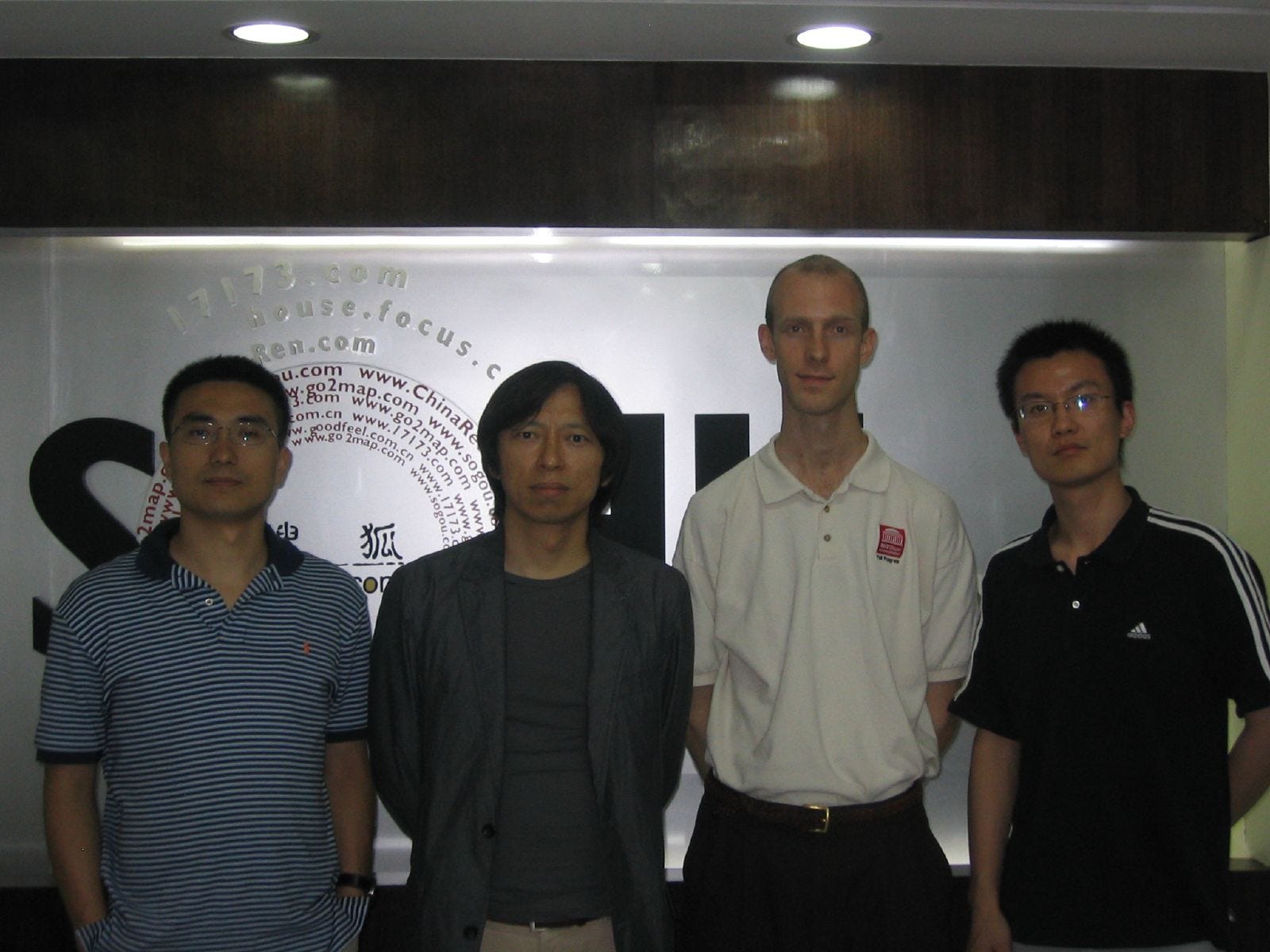
The decision that compounded the most for my career,, though neither of us would have called it that at the time, was Ed’s role in making the Tsinghua alumni survey possible. He suggested the project in 2006. Then he raised the funding for it himself, with a single phone call to Charles Zhang (张朝阳), the Tsinghua-educated founder of Sohu.com, whom Ed had backed years earlier as the first angel check into what became Sohu. Charles in turn donated the funds to Tsinghua to support the survey. We launched the instrument in 2007.
Ed had been hosting Delin Yang and many other Chinese visiting scholars at MIT for years before that, so the institutional groundwork between MIT Sloan and Tsinghua was already in place. The Tsinghua connection set the trajectory for most of my subsequent research, and it is the reason I have spent so much time in China since. Years later I had the chance to interview Charles Zhang myself, alongside Yanbo Wang, closing a small loop that had started with a phone call Ed made in 2006.
The arc of my own work, pioneering large-scale alumni-entrepreneur surveys as a primary research instrument, runs directly out of Ed’s office between 2005 and 2007. Once I was on the Stanford faculty I extended the methodology, with Bill Miller, into the Stanford Alumni Innovation Survey. That instrument in turn inspired several others, Mike Lenox and Andy King’s UVA Darden study (2014), which I worked on; the University of Toronto’s alumni survey; and several more I had no direct hand in. None of any of it happens without that 2006 phone call.
That is the thing about good advisors. They do not tell you what your career is going to be. They put you in the room where it could happen, and they get out of the way.
What he built
Ed had a foot in all three worlds: academic, entrepreneur, and philanthropic. He insisted on all three at once for sixty years. Of all the things I find myself emphasizing to my own students about his career, that breadth keeps moving up the list as I get older, because it is what set him apart from almost everyone else who ever studied entrepreneurship.
In the 1960s, while still a junior faculty member at Sloan, he co-founded Pugh-Roberts Associates, a firm that took system-dynamics consulting to government and private-sector partners and that still exists today as the Sage Analysis Group. A few years later he co-founded Medical Information Technology, Inc. (MEDITECH), which became one of the most durable health-care IT firms in the country. In the 1980s and 1990s he co-founded a series of Zero Stage Capital VC funds, putting early-stage money into MIT-adjacent technology startups long before that model was standard. By the time he was finished, per MIT’s accounting, Ed had co-founded 14 companies and served on the boards of more than 40. The first angel check into what later became Sohu.com, the same investment in Charles Zhang that, decades later, made our Tsinghua alumni survey possible was Ed’s.
The institution-building was the same instinct deployed against MIT itself. The MIT Entrepreneurship Center, which Ed founded in 1990, did not exist in any meaningful form before him. Neither did the MIT Sloan Management of Technology (MOT) program he chaired, nor the MIT Sloan Entrepreneurship and Innovation Certificate program he co-created. He spent half a century quietly turning MIT into the entrepreneurial place we now take it to be. As MIT President Sally Kornbluth wrote the day he died, “It is not too much to say that MIT’s flourishing entrepreneurial culture and global reputation as a source of influential start-ups grew from seeds Ed planted here 50 years ago.” His successor at the Martin Trust Center, Bill Aulet, put it more directly: “Virtually everything today in the MIT entrepreneurial ecosystem, from classes to extracurricular activities, has some level of Ed’s DNA at its core.”
The philanthropy was less visible but equally serious. Ed inspired and funded — directly, indirectly, and through the institutions he built, generations of MIT alumni who went on to start companies, support causes, and back the next generation in turn. The arithmetic of that giving compounds the same way the academic genealogy does: each founder Ed helped become possible has, in many cases, gone on to make others possible. The Charles Zhang phone call that paid for the Tsinghua survey is one small data point in a very long series.
The thing that strikes me, looking at all of that together, is how unified it was. The advising, the research, the company-building, the institution-building, the philanthropy, they were not separate pursuits Ed happened to also do. They were one project, in three worlds. A scholar of entrepreneurship who also practiced it and funded it could see things about entrepreneurship that a scholar who only studied it could not. Ed insisted on standing in all three at once, and the field is what it is because he did.
What he came from
To talk about Ed honestly, you have to talk about the intellectual lineage he came from, because he did not invent himself out of nothing and neither do any of us. The lineage runs in two directions, both of which matter.
The methodological line runs through Jay W. Forrester, who founded the field of System Dynamics at MIT in the late 1950s. Forrester built the toolkit for rigorous quantitative modeling of complex industrial and social systems. Ed was the person who first applied that toolkit at dissertation depth and length: his 1962 PhD work, The Dynamics of Research and Development, was MIT’s first doctoral dissertation in system dynamics, applying Forrester’s methods to the management of R&D. Ed spent the next six decades pulling that approach into the study of management, technology, and entrepreneurship. Reading his own 2007 personal memoir of those years, it is hard to miss how seriously he took the obligation of making system dynamics useful.
The formal lineage runs through the MIT Department of Economics. Ed’s PhD was in economics in 1962, and his advisor of record was Franklin M. Fisher — the eminent MIT econometrician who would later chair the department, lead-witness the federal government’s IBM antitrust case, and write the central textbook on econometric identification problems. Fisher had earned his own PhD at Harvard in 1960, and he appears in Iain Cockburn’s published Tree of Zvi, the genealogy of Zvi Griliches, the Harvard economist who taught generations of scholars (Bronwyn Hall, Adam Jaffe, Manuel Trajtenberg, Josh Lerner, Scott Stern, Rebecca Henderson, and many others) to treat innovation, R&D, and entrepreneurship as measurable economic phenomena rather than ineffable acts of vision — as one of Griliches’s associates and coauthors.
That makes my own line, if I trace it formally:
Chuck Eesley → Ed Roberts → Franklin M. Fisher → Zvi Griliches.
I confess I had not really registered this until recently. I had thought of the Griliches tradition as the broader empirical context inside which my work sits, important, but parallel, not direct. The dissertation record makes the connection direct. Through Fisher, I am genuinely on the tree.
What this means is that I inherited two things from Ed at once. The system-dynamics methodology, the temperament of identifying an important question first, then building measurement apparatus and letting it push the theory, came from the Forrester line. The empirical-economics commitment to treating innovation and entrepreneurship as measurable, contestable, falsifiable phenomena came from the Fisher / Griliches line. Both are present in the MIT alumni surveys themselves, which are simultaneously a system-dynamics instrument (a measurement apparatus for a complex object) and a Griliches-style empirical innovation study (large-N, longitudinal, structured to support causal claims). Ed inherited both and combined them. I inherited the combination.
Ed and Zvi worked in different fields and on different problems, but barely a mile and a half apart, Ed at MIT, Zvi at Harvard, both Cambridge, both within walking distance of each other along Massachusetts Avenue. What I inherited from each was a common permission: that the things worth studying about entrepreneurship and innovation are the things that can actually be measured at scale and tested. Not because the unmeasurable doesn’t matter, it does; but because someone has to do the patient work of building the empirical floor under our claims. Without that floor, the field reverts to anecdote. Ed and Zvi, in different rooms but the same town, were both building that floor.
What I think this lineage actually is
Academic genealogies, Ed from Forrester, my methodology from the Griliches tradition, sound, when you describe them, like a kind of prestige claim. Look at the names in my line. I want to say very clearly: that is not what this is for.
What a lineage is for is to make obligations visible.
If you are descended, intellectually, methodologically, or as a person from someone who built something that compounds (a measurement instrument, a research tradition, a department, a way of asking questions), then you are not really inheriting the prestige. You are inheriting the responsibility. The most honest thing you can do with that inheritance is push it forward, slightly improved, for someone else.
For me, that has looked like this. Eleven former doctoral students have come out of my group; nine of them hold tenure-track faculty positions today — at Columbia, Oxford, Carnegie Mellon, Johns Hopkins, the National University of Singapore, the Chinese University of Hong Kong, the University of Oregon, the University of San Diego, and Pontificia Universidad Católica de Chile. Several of them have started their own doctoral students. Some of those students will themselves go on to advise.
I do not list any of this to put placement statistics in print. I list it because that is what Ed did. He advised. His students advised. His students’ students are now advising. The arithmetic is long and slow. None of it would have happened without the door he kept open in his office. Now I owe my own students the same door, and the same patience, and the same trust that they will go and do something that compounds again.
What I would say to him now
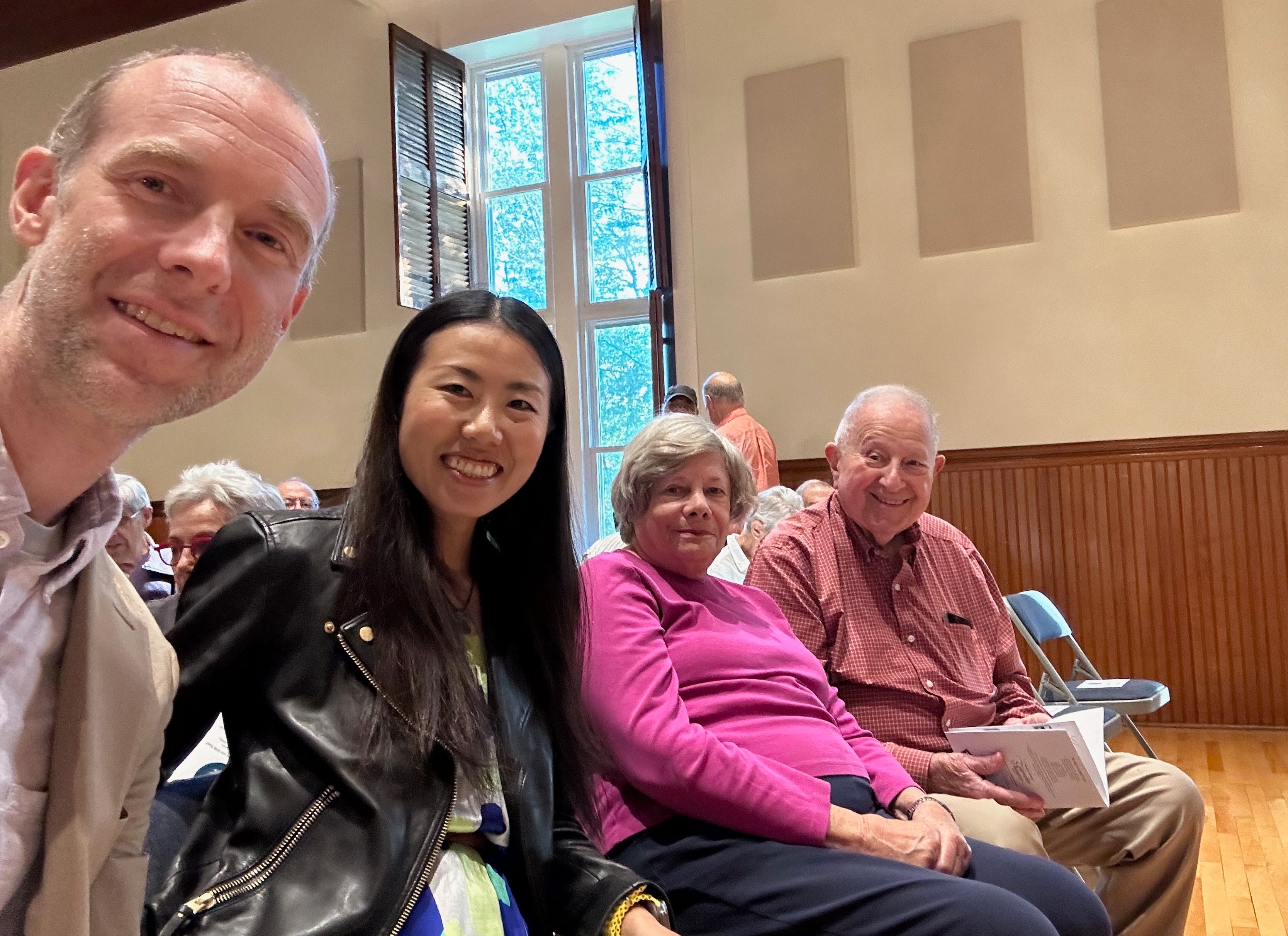
The last time I saw Ed in person was August 8, 2023. He and Nancy hosted us at their summer home in New Hampshire, and that evening they took us to a concert at the venue Ed sat on the board of. He was, in the way I always remembered him, gracious and curious, interested in my research, in our students, in the family foundation Lijie and I had just started, asking after specific people whose names he had no reason to remember and remembered anyway. We did not know, that evening, that we were saying goodbye. I am very glad we got to see him there.
I would tell him that the alumni-survey method he handed me has now been extended to Stanford, to Virginia, to Tsinghua, and that the data is producing the kind of empirical claims about the role of universities in the economy that we both used to argue mattered. I would tell him that nine of eleven of my former students are on the tenure track. I would tell him that the MIT 2009 paper he and I wrote together, and its subsequent 2015 update by Fiona Murray and Daniel Kim finding that MIT alumni had launched 30,200 active companies generating roughly $1.9 trillion in annual revenues, is one of the most consequential things I have ever put my name on, and that I understand more clearly now than I did then that the chunk he handed me was a gift.
And I would tell him that I am trying, every week, in conversations with my own students that sometimes last ten minutes and sometimes ninety, to do for them what he did for me. To make the next move clearer, and to trust them to make it.
Ed Roberts died on February 27, 2024. The work he started keeps going. That, I have come to think, is what the long arithmetic of advising is actually for.
More on Ed
MIT News obituary (Peter Dizikes, Feb 29, 2024)
Boston Globe obituary (Aaron Pressman, Mar 5, 2024)
MIT Infinite History video & transcript — Ed’s own 2012 oral history of his MIT career
“Making System Dynamics Useful: A Personal Memoir” — Roberts’ 2007 essay in System Dynamics Review
The Dynamics of Research and Development — Ed’s 1962 PhD dissertation at MIT (advisor Franklin M. Fisher)
Iain Cockburn’s Tree of Zvi — Zvi Griliches’s academic genealogy (4-generation PDF)
Franklin M. Fisher MIT obituary — Ed’s PhD advisor
Jay W. Forrester MIT obituary — system-dynamics methodological mentor on Ed’s dissertation
Stanford Alumni Innovation Survey — the methodology extended at Stanford
UVA Darden Entrepreneurial Alumni report (Lenox, King, Mehedi, 2014) — the methodology extended at UVA
Many thanks Chuck for painting the bigger picture about Ed Roberts. I learned about him when he together with Jay Forrester was telling the story of system dynamics and its “birth” some 70 years ago during the International System Dynamics Conference 2007 in Boston. He was for sure an amazing storyteller bringing the new field of system dynamics into the world and entrepreneurship.
Btw, I attended a MOOC on entrepreneurship that you led some 10 years ago. Still resonating.
Best
Ralf