
There is a story from the Shenzhen Physical AI Summit this year that I keep coming back to. A founder who had raised a Series A on the strength of a viral warehouse-picking video admitted on stage, to a good deal of laughter, that the demo had been running on a tethered power supply. The more telling part of the account was what investors in the room were asking about instead, which was unit economics, when cash flow turns positive, and how many units a company has actually shipped, and that is a very big shift for an industry that only a couple of years ago was mostly selling videos of robot hands flipping pancakes. There is a lot of money behind those questions now, since one tracker counted $47.4 billion across 521 physical AI deals in the first half of 2026, almost four times the level of the second half of 2025.
Over the last few months I have been writing here about what happens to entrepreneurship when AI makes production nearly free. My argument has been that the cost of faking evidence falls along with the cost of making a business plan, an app or a polished deck, so verification and judgment become the skills that founders and investors most need. The tethered demo is the same problem showing up in hardware. In the language of signaling theory going back to Michael Spence, a demo video is cheap talk, since almost anyone can stage one, and what investors are now asking for is much closer to a costly signal, a product that has shipped and keeps working in a customer's home or factory, which is very hard to fake. I spent twenty days this summer in Shenzhen with 15 Stanford undergraduates, and in my view it is still the best place in the world to see how that costly kind of evidence gets produced, and how fast.
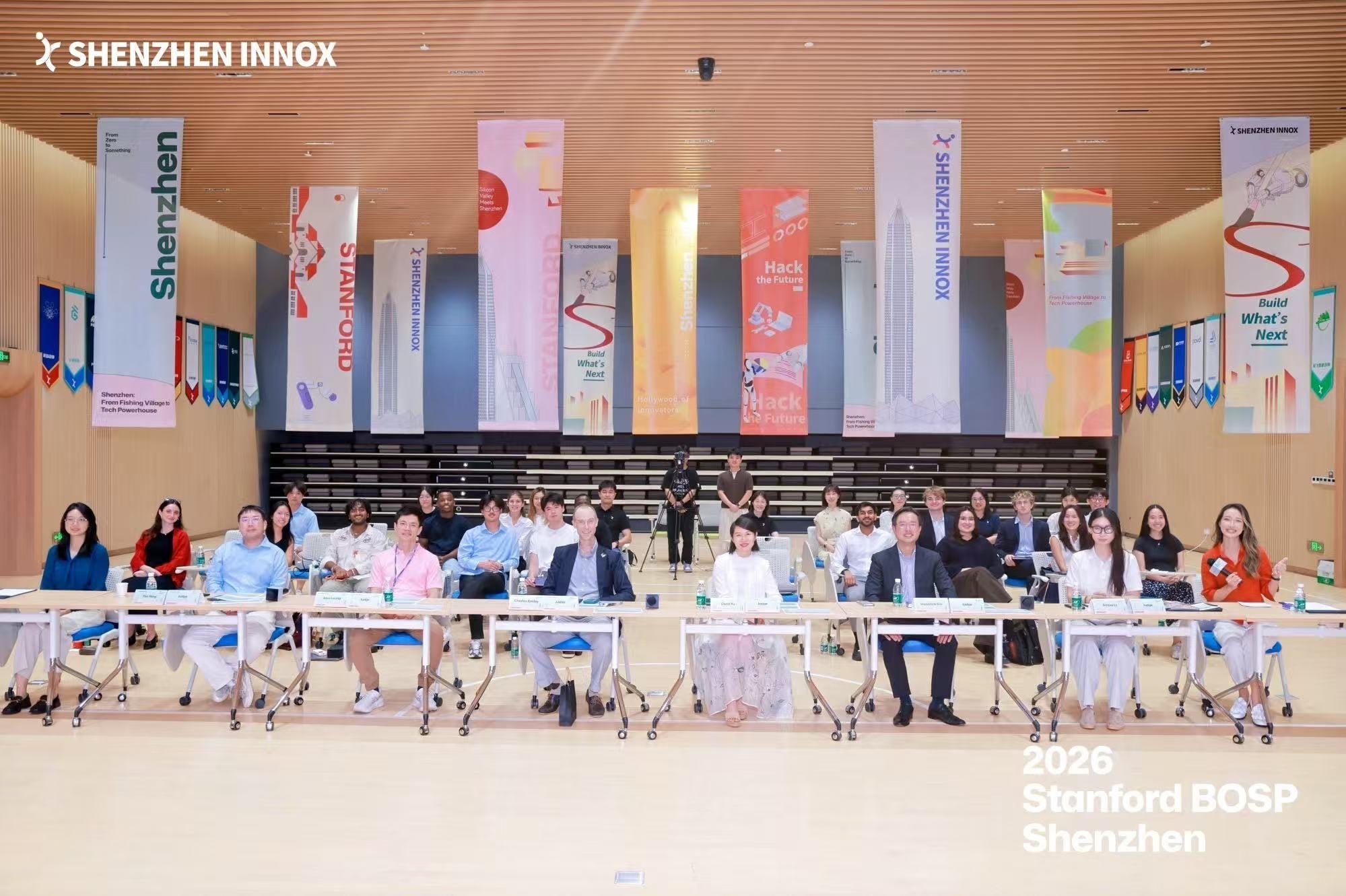
Let me first say a bit about the program. It was a Bing Overseas Studies Program seminar that I co-led with Carol Yu, who hosted us at InnoX Academy in Nanshan, with Xiaojing Xing as our TA and practitioner in residence, and the students worked in six teams that each had three weeks to find a problem, understand the users, and design, prototype and pitch a hardware venture (back home a single custom part can take longer than that just to arrive). Xiaojing had already given the students a head start before we left, teaching one of our orientation sessions on design thinking and on using AI in hardware development, which turned out to be exactly the combination the teams needed once they arrived. One team built a temperature sensor for baby strollers, another built a device to help people apply sunscreen or topical medications evenly, and a third built a balance board paired with an app that tracks your progress and lets you level up to harder balance tasks. The balance board team's path is a good example of how the three weeks went. They started out wanting to build a fall-prevention device for older adults, until a mentor asked them a deceptively simple question, which was why older people start using canes in the first place. That sent them back to the underlying problem and they refocused on balance training itself, and along the way they worked out that the person using the product and the person paying for it want different things, since an older adult cares a lot about privacy and about not being labeled as frail, while the adult children or care facilities who would buy it care about reducing the burden of caregiving. At the closing showcase the balance board team won the Most Popular Award and was recognized as a Potential Unicorn.
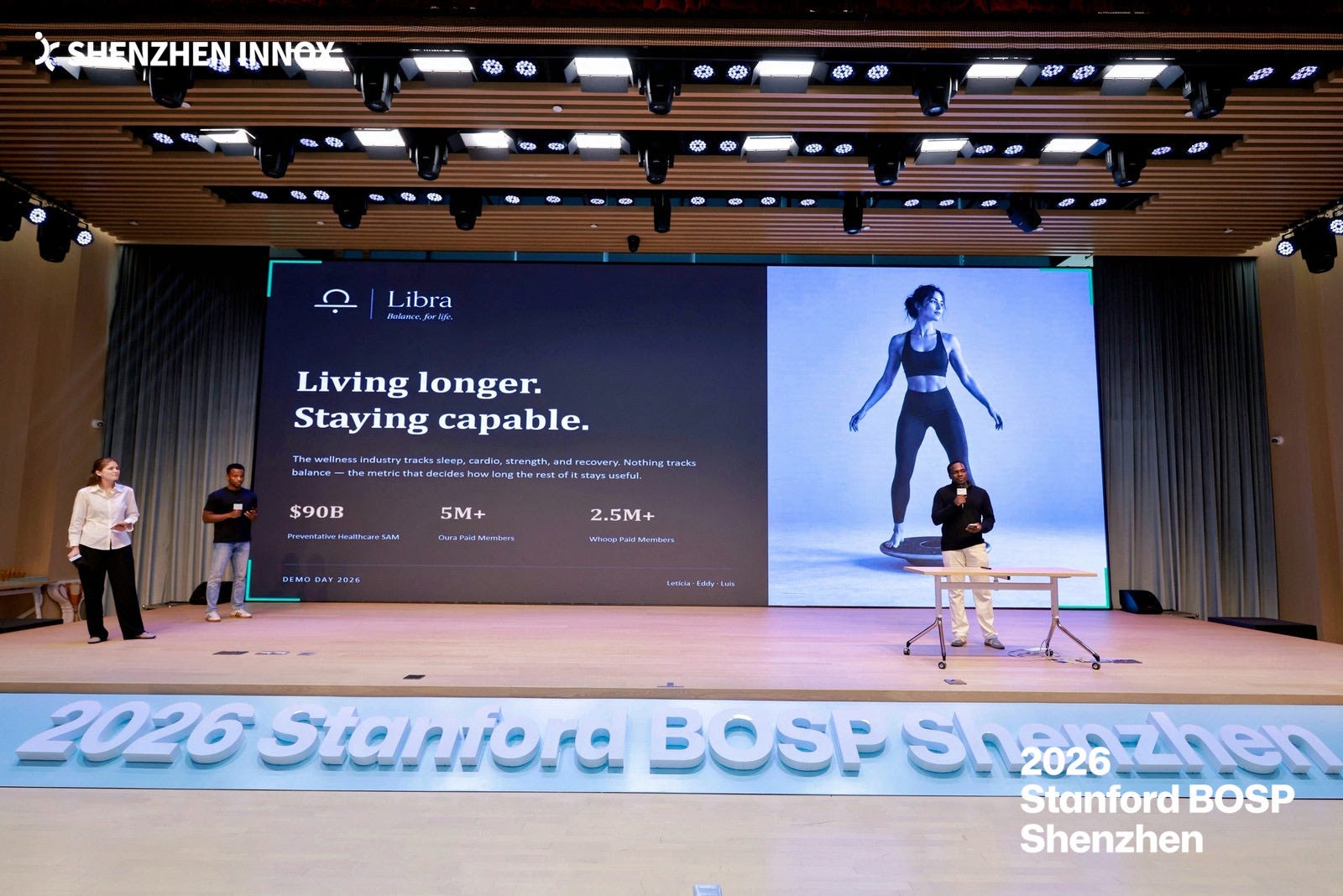
Photo: The balance board team with its prototype at the closing showcase.
All of these are the kind of product where a convincing prototype is only the start, since a stroller sensor that parents rely on or a device that applies medication has to work every single time, hold up under real use and meet safety requirements. One of the students, Anayochukwu, put this better than I could in InnoX's write-up of the program [link]. His point was that when you build AI hardware, reality pushes back on you right away, since components fail, costs matter, and real people never behave the way the model assumes they will. Yu Ying, InnoX's vice dean, made a related point to the students at the closing ceremony. AI is making it much faster to gather information, generate ideas and build products, and she warned them that speed is not the same as being right, and that without going back to real users and real needs you can now go in the wrong direction faster than ever before.
Along the way we visited DJI, EcoFlow, RoboSense, Lepu Medical and Tencent along with several younger hardware companies, spent a day in Guangzhou at Sun Yat-sen University, the Xpeng showroom and EHang, and went out to Dongguan, where we toured several factories and spent time at Xbotpark, including an exchange with the startups there. Dongguan is one of the most important manufacturing cities in the world and much of what gets designed in Shenzhen is built there, so seeing both on the same trip gave the students a very clear picture of how short the distance is between a design and a production line. At RoboSense, for instance, the students saw how the company moves a prototype from its local R&D teams to an automated factory with its own quality control systems and into volume production. Getting a group of students onto factory floors and into sessions with engineering teams at companies like these is extremely difficult to arrange, and none of it would have happened without Carol and her colleagues Shuyu Chen and Yi Chen at InnoX, along with Xiaojing, who went far beyond anything we asked of them. With only 15 students the group was small enough that they got real time with founders and engineers on most visits, and they asked much sharper questions as a result. Let me share a few photos, since the place is much easier to show than to describe.
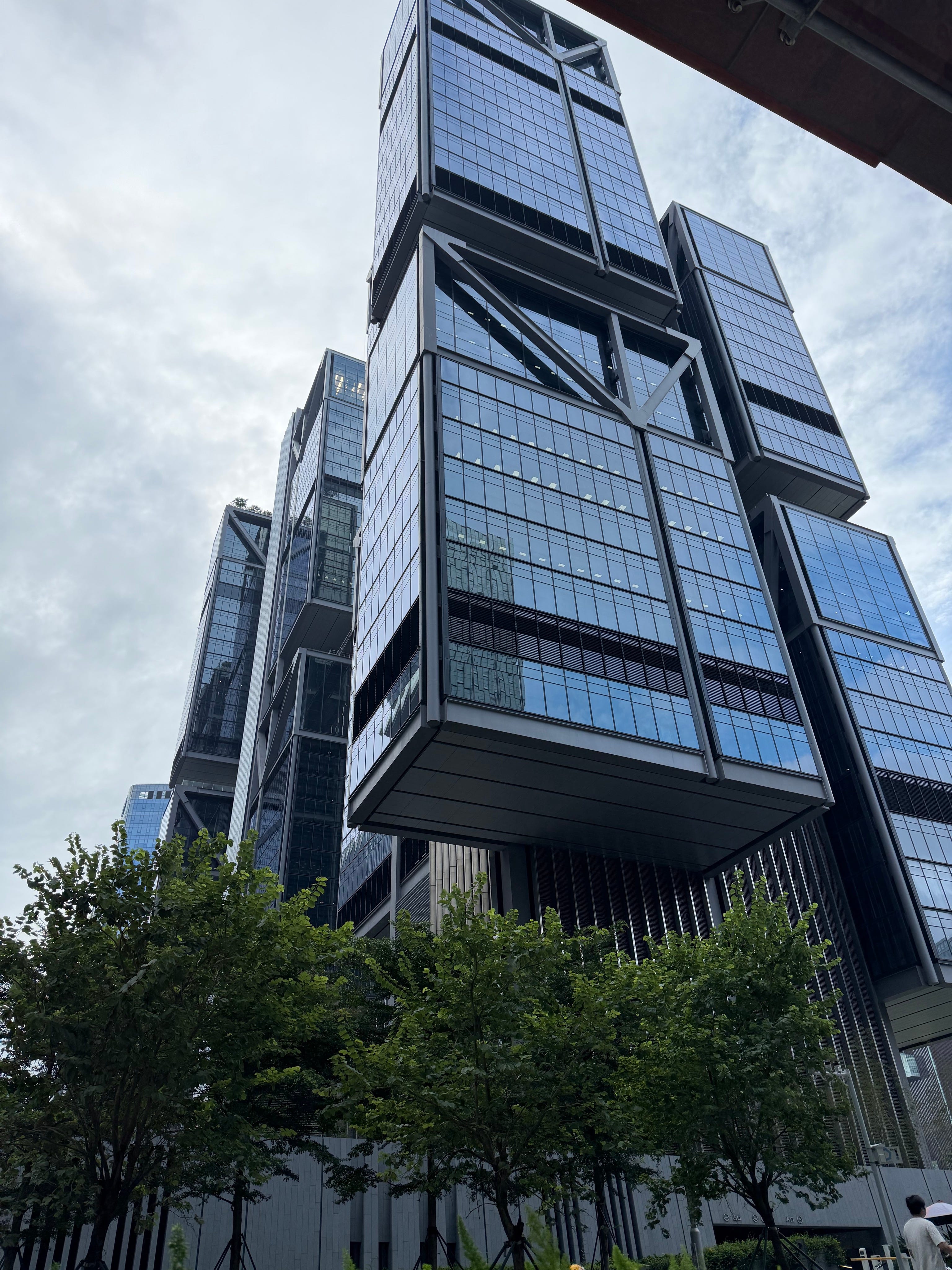
PHOTO: DJI headquarters. My everyday lunch spot was the DJI headquarters dining hall, about a five minute walk from InnoX.
The first thing you notice in Shenzhen is the drones. The city produces 70% of the world's consumer drones and half of its industrial drones, and drones are part of everyday life there in a way that still surprises visitors from California. Food delivery by drone is routine in parts of the city, and by March 2026 Shenzhen had built 1,284 takeoff and landing sites for low-altitude aircraft, beating its own target of 1,200 for the year. The detail that mattered most for my students was one we heard in different forms on several visits: the city claims every key material and core component for a drone can be sourced within an hour's drive, which is a remarkable concentration of capability in a single metro area.
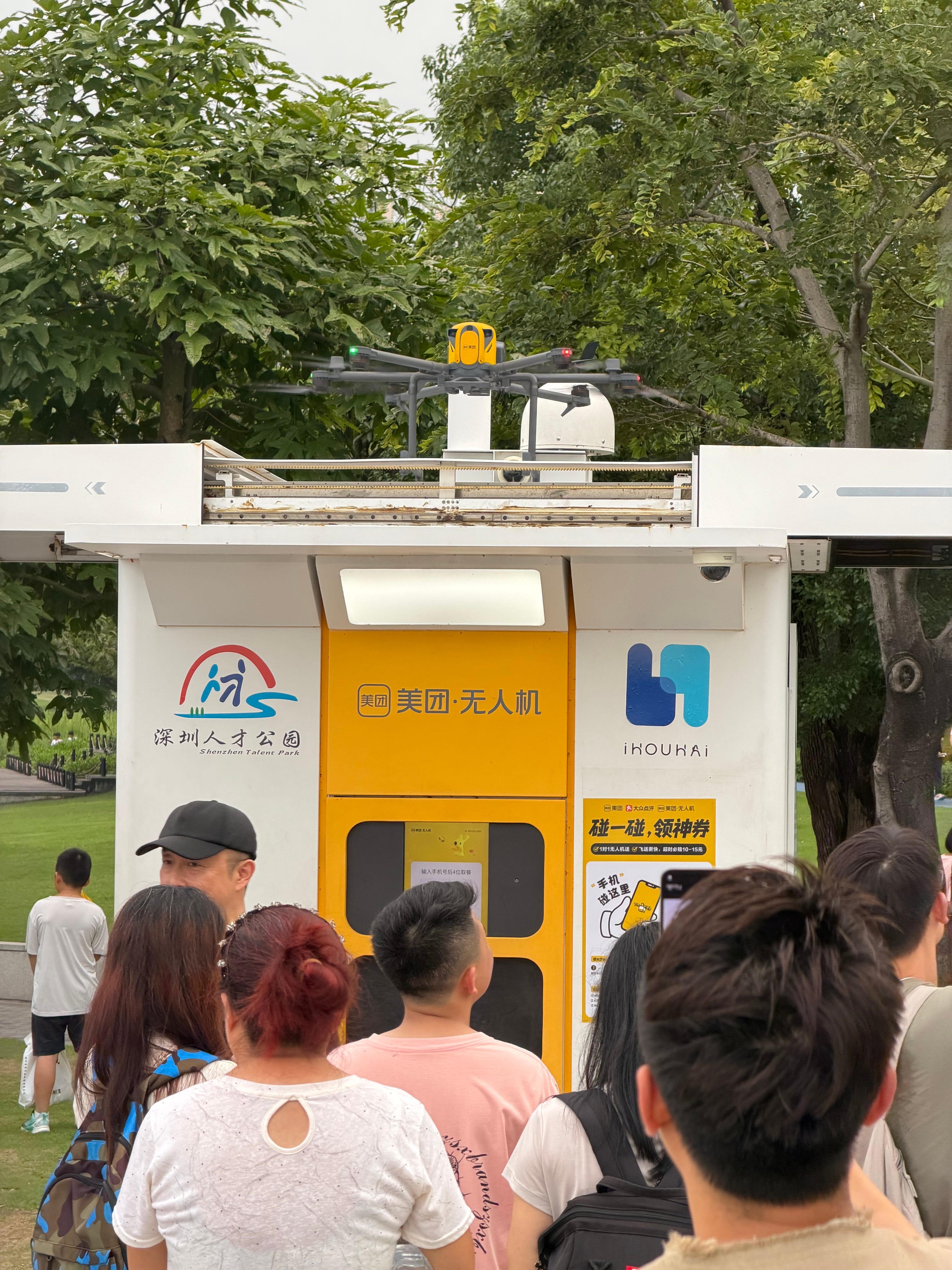
PHOTO: a delivery drone, a drone landing site.
The flying cars were the part of the trip students talked about most on the bus rides home, and I think they also illustrate the costly signal point better than anything else we saw. On our day trip to Guangzhou we visited EHang, which makes a pilotless two-seat passenger aircraft, the EH216-S, and it was the first pilotless passenger eVTOL to receive type, production and standard airworthiness certificates from China's civil aviation regulator. Those certificates took years and a great deal of money to earn, since the regulator had to write many of the standards from scratch along the way, and they are exactly the kind of evidence a slick video cannot substitute for. EHang also reports that the EH216 series has now flown in 23 countries with nearly 100,000 flight missions, which is a track record that compounds over time. At the Xpeng showroom the students saw the company's flying car unit, now called Aridge, which is taking a different route with a six-wheeled ground vehicle that carries a detachable two-seat aircraft, and it reports more than 7,000 pre-orders along with a factory in Guangzhou with initial capacity of 5,000 units a year, scaling to 10,000. Whether those orders turn into deliveries and safe flights is the costly signal still to come, and I told the students it is one I will be watching closely.

PHOTO: The Xpeng/Aridge flying car. Certificates and flight hours are a much harder signal to fake than a demo video.
Then there are the robots. RoboSense makes the lidar sensors that let cars and robots see, and at Xbotpark we saw the earliest stage of the pipeline, where small teams turn robotics research into products. Shenzhen is betting very heavily here, with more than 1,100 companies across the full embodied intelligence supply chain, from core components to finished robots. One development since we left fits my argument nicely. The city has opened what is effectively a robot school, where technicians perform household chores while robots mirror their movements and every motion is recorded as training data. The scarce input for physical AI turns out to be real-world data collected one motion at a time, which is very slow and expensive to produce and very hard to fake.
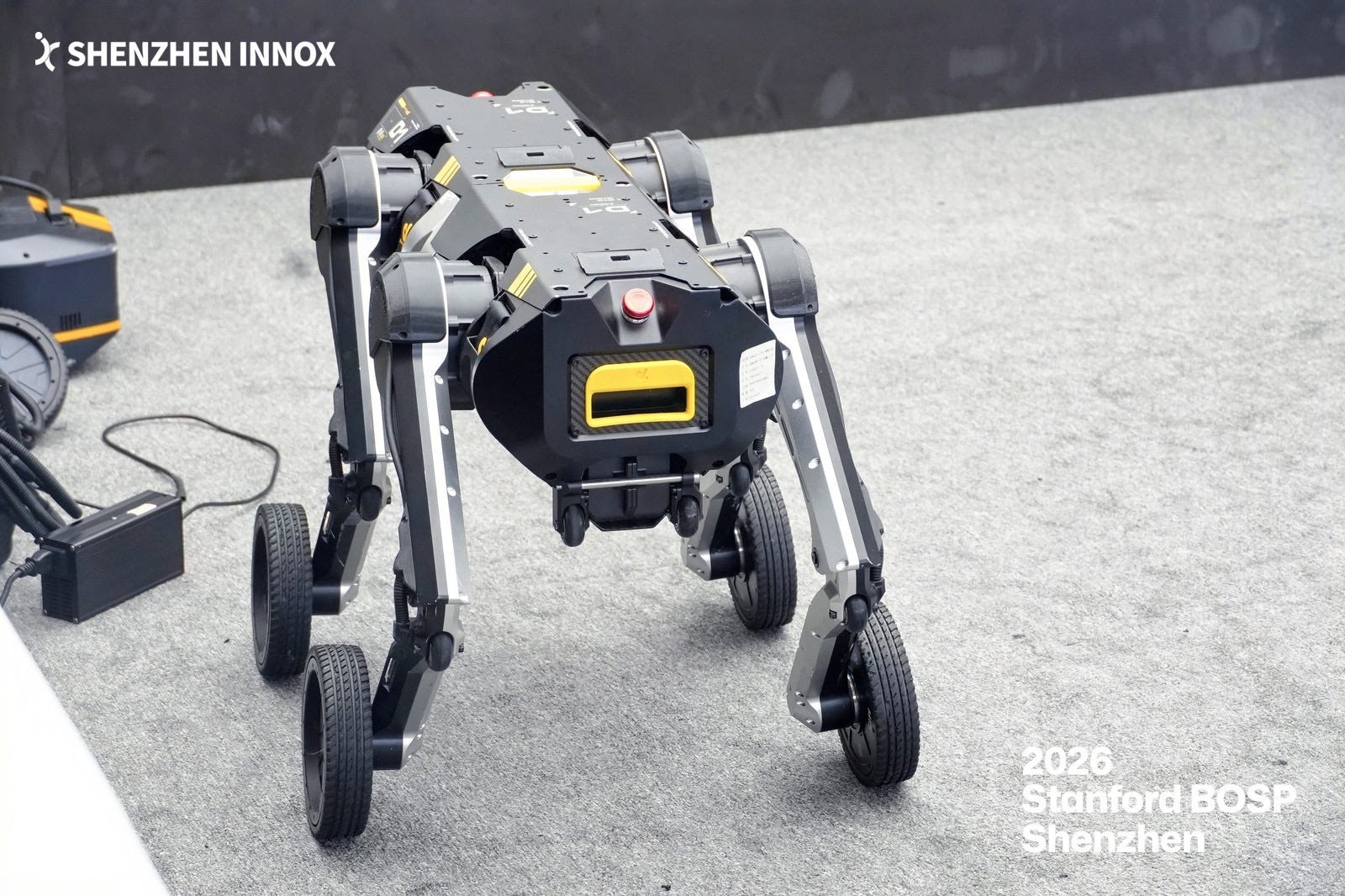
PHOTO: robots at RoboSense
We also made time to visit some of the historical sites that made Shenzhen what it is today, which was a lot of fun and gave me a chance to put a question to the students that I had been saving: what actually made Shenzhen what it is today? Before the trip they had read Juan Du's The Shenzhen Experiment, which takes apart the familiar story that Shenzhen was a sleepy fishing village until 1979 and shows that the area had centuries of settlement, trade and local governance behind it. (Our own program poster was titled "From Fishing Village to Tech Powerhouse," which gave the students something to argue about from the first day.) The students' first answers were the ones I hear from most visitors, e.g., cheap labor, government subsidies, proximity to Hong Kong, and those all matter, however I think each of the places we visited added a piece that those answers leave out.
I started at the Tianhou Temple, dedicated to Mazu, the goddess who protects sailors and fishermen, which is a good reminder that this coast was trading with the rest of the world long before the reforms, and that the habits and networks of a seafaring, commercial culture were already here when they arrived. At the port in Shekou we saw the famous sign reading "Time is money, efficiency is life," a slogan Yuan Geng, the founder of the Shekou Industrial Zone, first put forward in 1981, when talking openly about profit in China could get you attacked as a capitalist, and which Deng Xiaoping endorsed during his first visit to Shenzhen in 1984. In my view that sign is one of the best artifacts anywhere of norms changing in real time, since a zone where local officials were allowed to try things that were not yet permitted elsewhere also needed people to believe that speed and profit were legitimate goals. We then walked through Nantou Ancient City, the old walled town that served as the county seat for this whole region (including what is now Hong Kong) for centuries, and which later became one of the urban villages the modern city grew up around. Du argues that villages like this one, still largely controlled by the original families, built much of early Shenzhen themselves, putting up the cheap housing and small workshops that let millions of migrants and thousands of tiny firms get started, often well ahead of any official plan. Finally we visited the Deng Xiaoping statue, which commemorates the leader whose 1992 Southern Tour recommitted China to reform at a moment when it could easily have stalled, and which reminded the students that none of this was inevitable.
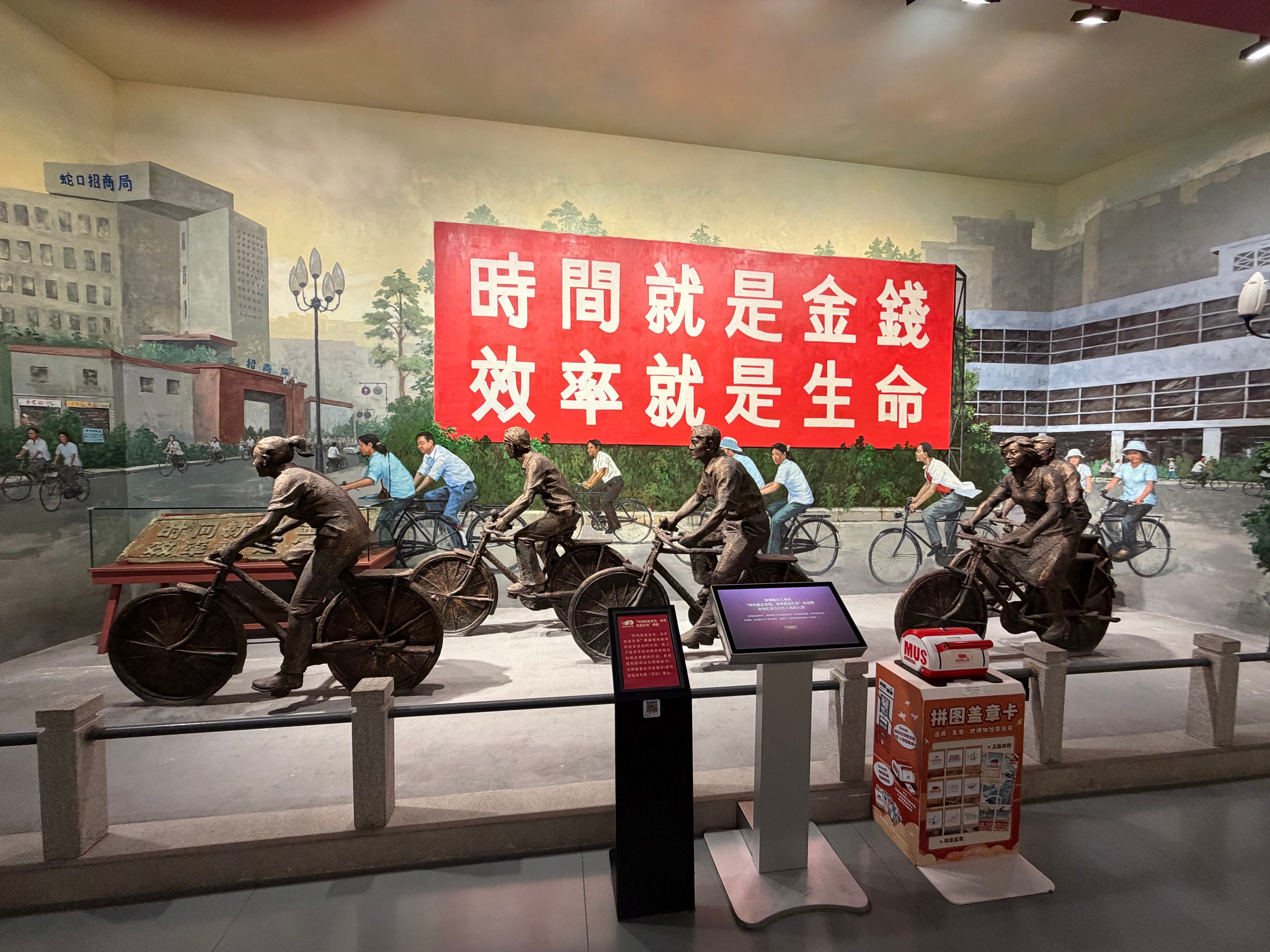
PHOTO: the "Time is money, efficiency is life"
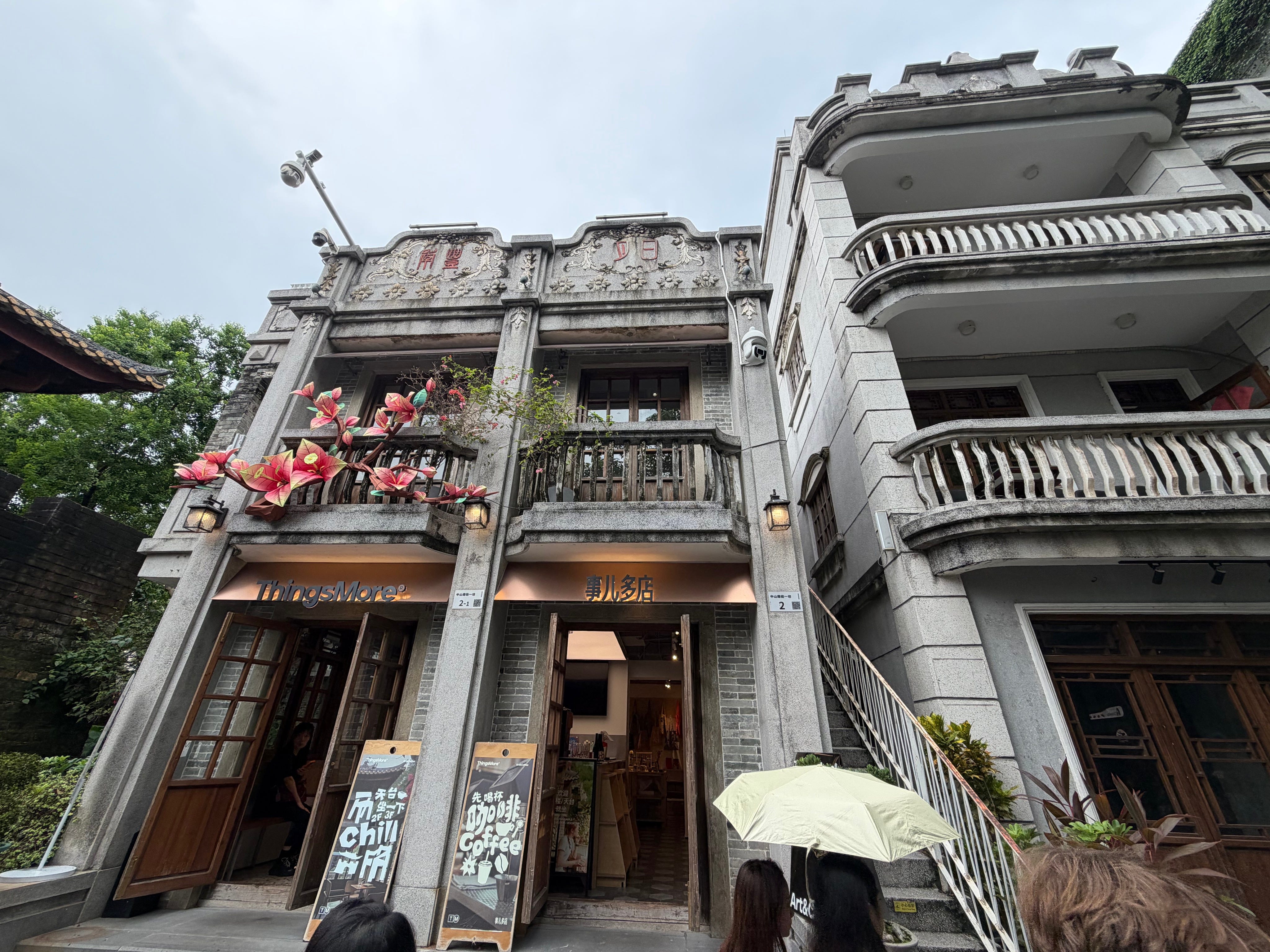
Photo: Nantou Ancient City was governing this region centuries before anyone called Shenzhen an instant city.
Put together, these places tell an institutional story, and the students had to wrestle with two versions of it. Sebastian Heilmann has called the top-down version experimentation under hierarchy, where local experiments that work get scaled up and the center decides which ones survive, and Chenggang Xu has described the broader system as one where local governments compete with each other on growth while the center sets the overall direction. Du's account puts much more weight on villagers, migrants and small builders who acted first and were often legalized afterward, and in my view the most honest answer is that Shenzhen needed both, since experiments from below only scale when someone above decides to let them. Over forty years that combination produced a very dense set of firms, suppliers and local officials who are used to moving quickly and trying things, and my own earlier work with colleagues on China's university reforms found that institutional changes like these can shape who becomes a high-tech entrepreneur in very measurable ways.
Near the end of the program I ran a reading seminar built around five puzzles, and the first one asked the students to choose between Juan Du and their own eyes. They had stood in front of the city model at the planning exhibition and looked down from the top of Ping An Finance Centre, and I asked them what had been left off the model, where the engineers at the companies we visited actually live, and who collects their rent. Then I asked which source had the stronger incentive to mislead them, an architect writing against the official narrative or hosts who had an interest in it. Another puzzle asked each team to imagine building the same venture in Palo Alto and name the exact stage where it would have broken down, and I pushed them with the history of Route 128 near Boston, which had bigger and more established firms than Silicon Valley and still lost, as AnnaLee Saxenian showed, because of how the region was organized. We also spent time on the part of the story that the speed depends on, including the student interns placed in factories during peak season, since in my view it is not possible to understand how Shenzhen works without asking who bears the costs of that speed.
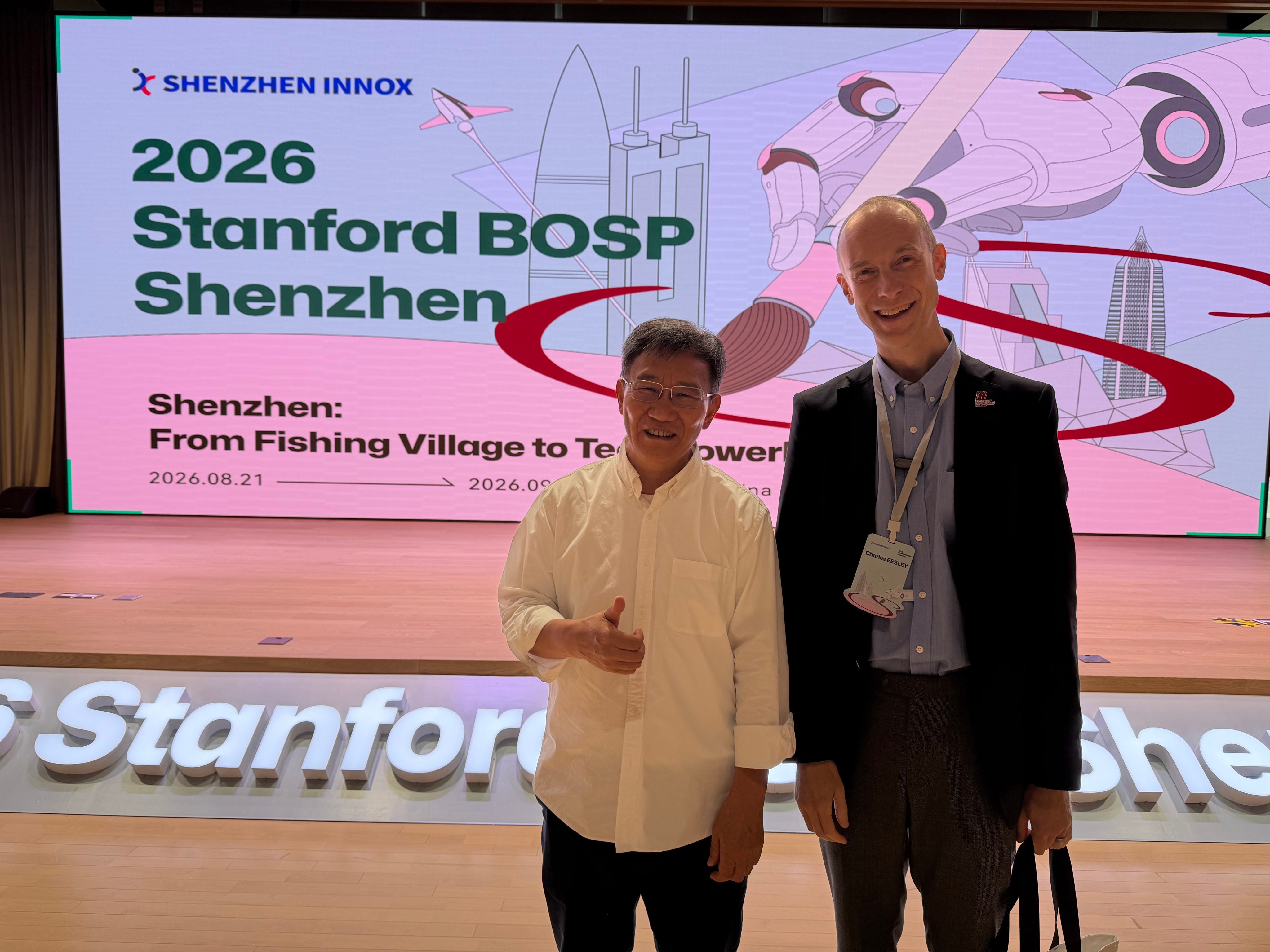
Xbotpark is a good example of the next layer of that story. It was founded by Li Zexiang, a robotics professor at HKUST who mentored DJI's founder Frank Wang and helped get DJI off the ground, and it sits in Dongguan, where it can combine Hong Kong's universities and research talent with the manufacturing base on the mainland side of the border. In my own research I call this pillar arbitrage, meaning that entrepreneurs and institution builders draw on the strongest rules, norms and capabilities from different systems and combine them in one place, and Xbotpark is one of the clearest cases I have seen of someone doing that deliberately.
What struck the students most, I think, was the speed that all of this produces. In Shenzhen and Dongguan the suppliers, machine shops and people who can help fix a design are often a short drive away, so the time between having an idea and holding a physical version of it is very short, and the build, test and learn loop for hardware gets much closer to what software founders are used to. For instance, one afternoon Cooper and his team were wandering the stalls of Huaqiangbei, the giant electronics market, looking for one very small component, and the owner of a tiny stall spent almost two hours helping them until they found it. Cooper's takeaway was the part I found most interesting, which was that a lot of what you need to know to build hardware, like what parts cost, which suppliers to trust and who can help, is not in textbooks or search engines or even in what an AI model will tell you, and you only get it through people and relationships built over time. That knowledge is about as hard to fake as anything I know of. Gary Pisano and Willy Shih made the argument years ago that this kind of industrial commons, the shared base of suppliers, skills and manufacturing know-how in a region, is what makes innovation possible in the first place, and that a country which lets it erode also loses the ability to invent the next generation of products. In my course I ask students to score a venture's sources of defensibility in the AI era, and the physical interface is the one they consistently underweight, since most of them come to entrepreneurship through software. After a week of watching lidar units, portable power stations and drones being designed and built, I could hear that changing in how they talked about their own ventures, and they could also see how much of the next wave of AI is going to show up in physical products that depend on supply chains centered in this region.
I would also like to highlight two things that surprised me. The first is that students asked in their evaluations for more pre-departure preparation on hardware product development, even though we had already run four orientation sessions. My read now is that the program itself created that appetite, since before Shenzhen hardware was fairly abstract for most of them, and after three weeks of factory tours and prototyping they wanted a depth they had not known to ask for. The second is that one student, Naomi, came back much more curious about the Silicon Valley ecosystem. She had mostly done lab research before, and Shenzhen was the first time she had taken an idea all the way to a product with a team, and she was struck by how willing local founders were to share how they had come up with their ideas, swap WeChat contacts and invite the students into their labs. Seeing how a very different ecosystem was built made her want to understand how ours actually works, and since returning to campus she has been getting more involved with STVP (I ran into her recently at the BOSP welcome back event). This fits a lot of what we know about exposure. Alex Bell, Raj Chetty and their coauthors found that children who grow up around inventors are far more likely to become inventors themselves, and Josh Lerner and Ulrike Malmendier found that peers shape who becomes an entrepreneur, so I don't think it should surprise us that three weeks of seeing a very different ecosystem up close changes what students want to learn next. It is also one of the most valuable things a program abroad can do, since students who have spent their whole college lives in Palo Alto tend to take it as the natural order of things.
Let me close with a connection I didn't expect. A few weeks after getting back I reconnected with Jing Wu, who first came to Stanford in 2010 as a Tsinghua undergraduate in the UGVR program, stopped by my office several times that summer to talk about academia and research, and is now a full professor at CUHK studying how geopolitics is reshaping global supply chains (I wrote a bit more about our reunion on LinkedIn (link)). Saxenian also described people like Jing as the new argonauts, engineers and scholars who move between Silicon Valley and Asia and carry ideas, networks and capabilities back and forth, and she argued that this brain circulation did a great deal to build the technology regions on both sides of the Pacific. UGVR brings talented students from China into Stanford labs and our seminar takes Stanford students into Chinese companies, and both are long-term bets where the payoff often shows up a decade or more later. With academic ties between the two countries getting thinner, I think it is very important to keep making those bets in both directions. Overall, this was one of the most rewarding programs I have run in many years of teaching abroad, and I look forward to seeing where these 15 students take what they saw.
Further reading
Michael Spence, "Job Market Signaling," Quarterly Journal of Economics (1973).
Sebastian Heilmann, "Policy Experimentation in China's Economic Rise," Studies in Comparative International Development (2008).
Chenggang Xu, "The Fundamental Institutions of China's Reforms and Development," Journal of Economic Literature (2011).
Juan Du, The Shenzhen Experiment: The Story of China's Instant City (Harvard University Press, 2020).
Charles Eesley, Jian Bai Li and Delin Yang, "Does Institutional Change in Universities Influence High-Tech Entrepreneurship? Evidence from China's Project 985," Organization Science (2016).
Gary Pisano and Willy Shih, Producing Prosperity: Why America Needs a Manufacturing Renaissance (2012).
AnnaLee Saxenian, Regional Advantage: Culture and Competition in Silicon Valley and Route 128 (1994).
AnnaLee Saxenian, The New Argonauts: Regional Advantage in a Global Economy (2006).
Alex Bell, Raj Chetty, Xavier Jaravel, Neviana Petkova and John Van Reenen, "Who Becomes an Inventor in America?" Quarterly Journal of Economics (2019).
Josh Lerner and Ulrike Malmendier, "With a Little Help from My (Random) Friends," Review of Financial Studies (2013).